

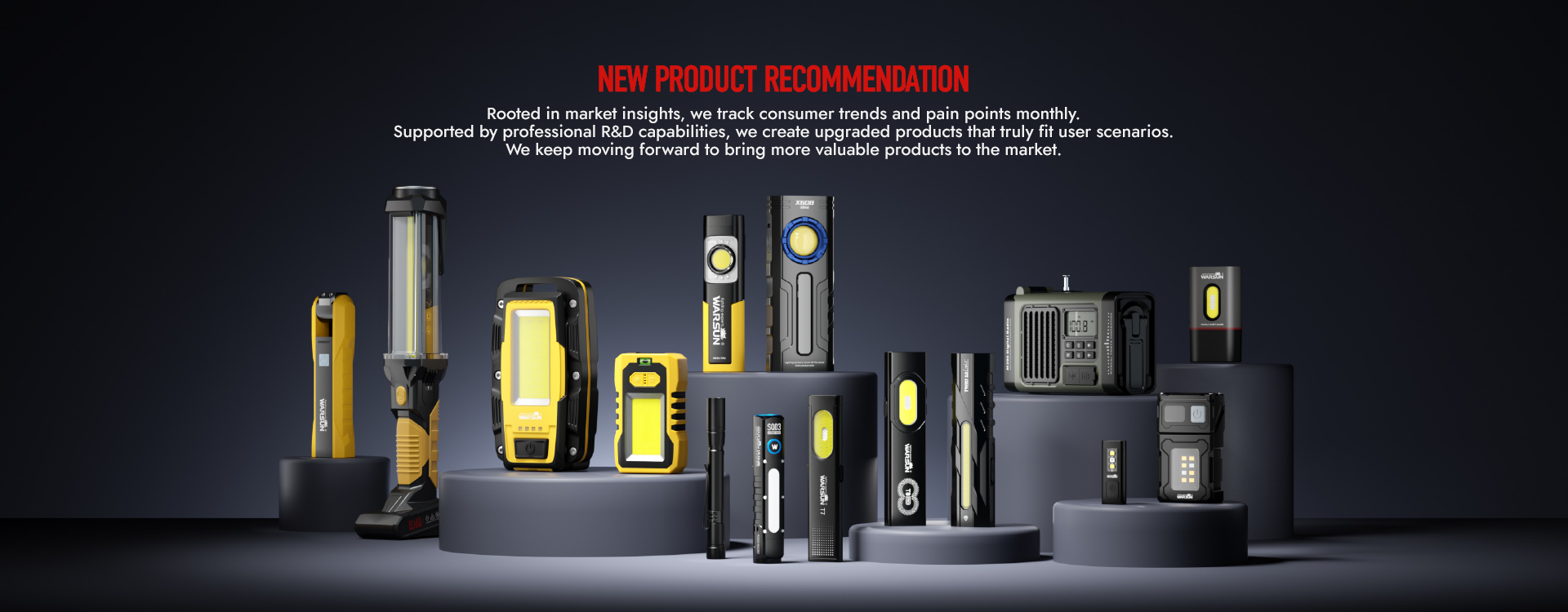
Choosing a portable LED light is easier when you start with the job instead of the highest lumen number. A handheld flashlight gives you directional reach, a pocket light prioritizes compact everyday carry, a headlamp keeps both hands free, and a work light spreads illumination across a larger task area.
This WARSUN guide compares the four main portable lighting formats by beam, runtime, portability, mounting options, and real-world use. Use it to decide which light belongs in your pocket, vehicle, toolbox, home emergency kit, or outdoor gear.
Quick Answer: Which Portable LED Light Should You Choose?
| Light type | Best for | Main advantage | Consider before buying |
|---|---|---|---|
| Handheld LED flashlight | General use, vehicles, outdoor visibility, emergencies | Easy to aim with useful beam distance | Larger models can be heavier |
| Pocket light | Everyday carry, inspections, quick household tasks | Compact and easy to keep nearby | Smaller body can limit runtime or sustained output |
| Headlamp | Hiking, repairs, running, fishing, campsite tasks | Hands-free lighting that follows your line of sight | Comfort and beam angle matter as much as brightness |
| Work light | Workshops, garages, construction, wide-area repairs | Broad, even illumination with mounting options | Less suitable for long-distance beam throw |
If you need one versatile light, start with a handheld flashlight. If you want a light that can stay with you every day, choose a pocket light. Select a headlamp when both hands must remain available, and choose a work light when the entire task area needs steady illumination.
What to Compare Before Buying a Portable LED Light
Product type is only the first decision. The following factors determine whether a light will feel practical after the first week of use.
1. Primary task
Define what you need to see. Finding a keyhole, repairing an engine, walking a trail, and lighting a workbench require different beam patterns and mounting methods. A light that fits the task will usually outperform a brighter product designed for another purpose.
2. Beam shape and distance
A narrow beam concentrates light for longer-range visibility. A wide beam spreads light across the foreground and is more comfortable for close work. Many everyday situations benefit from a balanced beam with a bright center and useful spill around it.
3. Runtime at useful modes
Maximum runtime figures are often measured at a low setting. Compare the expected runtime at the brightness level you will actually use. Multiple modes let you reduce output for close tasks and save higher output for short periods.
4. Size, weight, and grip
A portable LED light should fit its intended carry location. Pocket users need a slim profile and secure clip. Outdoor users may accept more weight for longer runtime. Workshop users may value a stable base or magnetic mount more than minimum size.
5. Power and charging
Rechargeable lights are convenient for frequent use, while replaceable-battery models can be useful where charging is unavailable. Check the charging port, battery indicator, charging time, and whether compatible replacement power is easy to obtain.
6. Durability and environment
Consider rain, dust, drops, temperature, and storage conditions. An IP rating is useful only within the specific conditions stated by the manufacturer, so do not treat every water-resistant light as suitable for submersion.
Handheld LED Flashlights: The Most Versatile Choice
A handheld LED flashlight is the general-purpose option for home, vehicle, outdoor, and emergency use. Its shape makes the beam easy to direct into a room, across a yard, under a vehicle, or along a dark path.
Choose a compact model for frequent carrying and a larger model when sustained runtime, a larger battery, or longer beam distance matters more than weight. Useful features can include multiple brightness levels, a textured grip, a protected switch, USB-C charging, and a battery-level indicator.
For broader outdoor visibility and higher output, explore WARSUN high-output flashlights. For a smaller daily-carry format, compare the EDC flashlight collection.
When a handheld flashlight is the best fit
- Checking a vehicle, yard, hallway, or storage area
- Keeping a dependable light in a home emergency kit
- Walking at night when you want to aim the beam independently
- Using one light across several different environments
- Providing a longer-range backup for camping or hiking
Pocket Lights: Compact Illumination for Everyday Carry
A pocket light reduces the size and weight of a traditional flashlight so it is easier to carry every day. It can live in a pocket, organizer, bag, glove box, toolbox, or desk drawer without taking much space.
Look for a clip that holds the light securely, controls that resist accidental activation, and a body shape that feels comfortable beside keys or other gear. A magnetic base or side light can add hands-free value for quick repairs and inspections.
Pocket lights are ideal for finding dropped objects, reading labels, checking equipment, navigating a dark parking area, or responding to a short power interruption. They also preserve phone battery by separating illumination from communication and navigation.
When a pocket light is the best fit
- Everyday carry and quick-access lighting
- Close inspection in tight spaces
- Vehicle consoles, small emergency kits, and travel bags
- Technicians who need a compact secondary light
- People who are unlikely to carry a full-size flashlight
Headlamps: Hands-Free Light That Moves With You
A headlamp places the beam near your line of sight and leaves both hands available. This makes it especially useful for repairs, hiking, running, fishing, cooking at camp, setting up equipment, and moving through low-light areas.
Brightness is only one part of headlamp performance. Check strap comfort, weight distribution, beam angle, mode controls, runtime at medium output, and resistance to weather. A broad beam works well for close tasks, while a more focused beam helps with route finding and objects farther ahead.
Browse WARSUN rechargeable headlamps when hands-free operation is the main requirement.
When a headlamp is the best fit
- Working with tools while keeping both hands available
- Hiking, running, fishing, and campsite setup
- Reading maps or organizing equipment in the dark
- Tasks that require the beam to follow your head movement
- Using trekking poles, carrying supplies, or climbing carefully
Work Lights: Wide, Stable Illumination for Task Areas
A work light is designed to illuminate an area rather than create a narrow handheld beam. COB panels and other wide-light designs can reduce harsh hotspots and make a workbench, engine bay, cabinet, crawl space, or repair area easier to see.
Magnetic bases, hooks, stands, rotating bodies, and adjustable panels let a work light stay in position while you use both hands. This format is often the better choice for longer repair sessions, even when a flashlight is also available for detailed inspection.
Explore WARSUN work lamps and magnetic work lights for garage, maintenance, workshop, and jobsite applications.
How Many Lumens Do You Need?
Lumens describe total light output, but they do not tell you how the beam is distributed or how long maximum output can be sustained. A well-shaped lower-output beam can be more useful than uncontrolled brightness that creates glare or drains the battery quickly.
| Typical task | Practical output range | Recommended light style |
|---|---|---|
| Reading, keyholes, and close inspection | 20-150 lumens | Pocket light or low headlamp mode |
| Household tasks and equipment checks | 100-500 lumens | Pocket light or handheld flashlight |
| Walking, vehicle checks, and repairs | 300-1,000 lumens | Handheld flashlight, headlamp, or work light |
| Outdoor visibility and larger spaces | 800-2,000+ lumens | High-output flashlight or powerful work light |
These ranges are practical starting points rather than strict rules. Reflective surfaces, fog, dust, distance, color temperature, and beam width can change how bright a portable LED light appears.
Rechargeable vs. Replaceable-Battery Lights
Rechargeable portable lights
A rechargeable flashlight, pocket light, or headlamp is convenient for frequent use. USB-C charging can simplify cable management, and a battery indicator helps you decide when to top up. Recharge the light before important trips and inspect the cable and charging port regularly.
Replaceable-battery lights
Replaceable batteries can restore power quickly when no outlet or power bank is available. They may suit emergency storage, remote travel, or occasional use, provided compatible batteries are stored correctly and checked on a schedule.
Whichever system you choose, do not use batteries that are swollen, leaking, damaged, or unusually hot. Follow the charging and battery instructions supplied with the light.
Best Light Type by Use Case
Home and power outages
Keep a pocket light where it is easy to reach and a brighter handheld flashlight or work light for longer outages. Store each light in a consistent place so family members can find it without searching in the dark.
Vehicles and roadside emergencies
A compact flashlight is useful for tire checks, under-hood inspection, and walking safely around a vehicle. A magnetic work light can illuminate a repair area while leaving both hands available. See more options in the WARSUN emergency and backup collection.
Hiking and camping
A headlamp handles walking, cooking, and campsite tasks, while a handheld flashlight adds independent aiming and longer-range backup. A lantern or wide-area light can make shared campsite spaces more comfortable. Browse outdoor lights for additional options.
Workshops and professional repairs
Pair a work light for area illumination with a pocket light or flashlight for detailed inspection. Magnetic and hanging mounts can reduce the need to balance a light against tools or equipment.
Everyday carry
Choose the smallest light you will reliably keep with you. A secure clip, sensible low mode, rechargeable power, and controls that resist accidental activation are often more important than extreme maximum output.
A Simple Three-Step Buying Method
- Choose the task: Decide whether you need distance, close inspection, hands-free movement, or wide-area illumination.
- Choose the carry method: Pocket, bag, vehicle, head strap, toolbox, or fixed work area.
- Choose the power plan: Frequent charging, replaceable batteries, or a backup light for redundancy.
This sequence prevents overbuying and makes specifications easier to compare. Once the format is correct, evaluate beam, runtime, controls, durability, and accessories within that category.
Explore WARSUN Portable Lighting
WARSUN develops portable LED lighting for everyday carry, outdoor use, repair work, emergency preparation, and professional applications. The range includes handheld flashlights, EDC pocket lights, rechargeable headlamps, magnetic work lights, camping lights, and backup lighting.
Browse WARSUN new releases to see recently added lighting products. Retailers, distributors, and business buyers can also review WARSUN wholesale options.
Frequently Asked Questions
Is a headlamp better than a flashlight?
A headlamp is better when you need both hands free or want the beam to follow your line of sight. A handheld flashlight is better when you need independent aiming, easier signaling, or more directional reach. Many outdoor and work kits benefit from carrying both.
What is the best portable LED light for everyday use?
A pocket light is usually the easiest everyday option because it is compact and quick to access. A small handheld flashlight can be better if you need longer runtime or more beam distance.
How many lumens should a pocket light have?
For most close tasks, 100-500 lumens is useful, especially when the light also includes a lower mode. Higher output can help outdoors, but size, runtime, beam pattern, and heat management remain important.
Are rechargeable flashlights better?
Rechargeable lights are convenient for frequent use and can reduce the need for disposable batteries. Replaceable-battery models remain useful when immediate battery swaps or long-term emergency storage are priorities.
Do I need a separate work light?
A separate work light is worthwhile when repairs take more than a few minutes or require both hands. Its broad beam and mounting options can illuminate the whole task area more effectively than a narrow handheld beam.
Final Recommendation
Select a portable LED light by matching its format to the work. Choose a handheld flashlight for versatility and reach, a pocket light for everyday access, a headlamp for hands-free movement, and a work light for broad task illumination. Then compare the beam, runtime, charging method, weight, controls, durability, and mounting options that matter in your environment.
The right light is not necessarily the brightest one. It is the one that fits your routine, stays powered, and performs the task safely when you need it.
Share:
What Is an EDC Flashlight? 12 Reasons to Carry One Every Day